

Every major drug seizure is rightly celebrated as an enforcement success. But behind every intercepted consignment lies a more uncomfortable question: what is creating a market large and profitable enough for traffickers to repeatedly take such enormous risks?
India’s recent experience makes that question increasingly relevant. Across the country, enforcement agencies are encountering cocaine, methamphetamine, amphetamine-type stimulants, MDMA, heroin, cannabis and other narcotic and psychotropic substances through airports, highways, railway networks, courier channels and border routes. The substances are changing, the routes are changing and the methods of concealment are becoming increasingly sophisticated.
One particularly striking development has been the repeated arrival of high-grade hydroponic cannabis from Thailand. Indian airports have witnessed a succession of cases involving passengers arriving from Bangkok with hydroponic weed concealed in trolley bags, food packets and other forms of baggage. Mumbai alone has recorded well over a hundred such cases, while similar interceptions have taken place at airports in different parts of India. The frequency and scale of these operations demonstrate that this is no longer an occasional smuggling trend but an organised and lucrative market.
At the same time, recent Directorate of Revenue Intelligence operations have uncovered trafficking involving cocaine, synthetic stimulants, MDMA, heroin and other contraband across airports, railway stations, highways and courier systems. The pattern points towards diversified international and domestic supply networks constantly adapting to enforcement pressure.
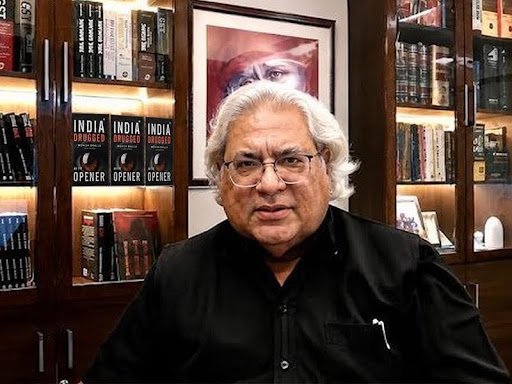
For Dr Monish Bhalla, a former officer of the Narcotics Control Bureau, these developments reinforce an argument he has been making for years: India cannot fight the narcotics problem only at the point of supply.
Bhalla, author of India Drugged – An Eye Opener and Narco Jihad – When Drugs Fund Terror, has spent decades studying narcotics, trafficking, addiction and their wider social and national-security implications. Through his books, research, columns and television discussions, he has repeatedly called for drug abuse to be treated not merely as an enforcement issue but as a national social challenge.
His central proposition is simple:
“If demand continues, supply will find a way.”
A trafficking route can be blocked. A courier can be arrested. A syndicate can be dismantled and a consignment destroyed. But where a profitable consumer market survives, another trafficker has an incentive to find another route, another courier and another method.
That does not diminish the importance of enforcement. India needs strong action by the Narcotics Control Bureau, DRI, Customs, police forces, Coast Guard and other agencies. What Bhalla is arguing for is an equally serious attack on the other side of the equation — drug demand.
And this is where he believes Corporate Social Responsibility can play a transformative role.
Bhalla has proposed that Drug Awareness, Prevention, De-addiction, Treatment, Rehabilitation and After-care should receive explicit recognition within Schedule VII of the Companies Act, 2013, and that Nasha Mukt Bharat should be developed as a clearly identified national CSR priority.
The legal foundation already exists. Section 135 of the Companies Act creates the statutory CSR framework for qualifying companies, while Schedule VII includes “promoting health care including preventive health care.” The Ministry of Corporate Affairs has clarified that Schedule VII is broad-based and should be interpreted liberally. Substance-abuse initiatives can therefore potentially fit within existing categories, but drug prevention, de-addiction and rehabilitation are not expressly named as a distinct CSR priority.
Explicit recognition could bring greater visibility, structured funding and long-term corporate participation.
CSR resources could support awareness in schools and universities, counselling and early intervention, professional rehabilitation facilities, family-support programmes, training of addiction professionals, research, vocational rehabilitation and, critically, after-care for recovering addicts.
The larger message is that India does not have to choose between supply reduction and demand reduction. It needs both.
Every consignment intercepted prevents drugs from reaching the street. But every person prevented from entering addiction reduces the market waiting for the next consignment.
The real objective must therefore go beyond catching the supplier. India must steadily reduce the demand that keeps creating one. And making drug-demand reduction a national CSR priority could become an important step in that direction.
