

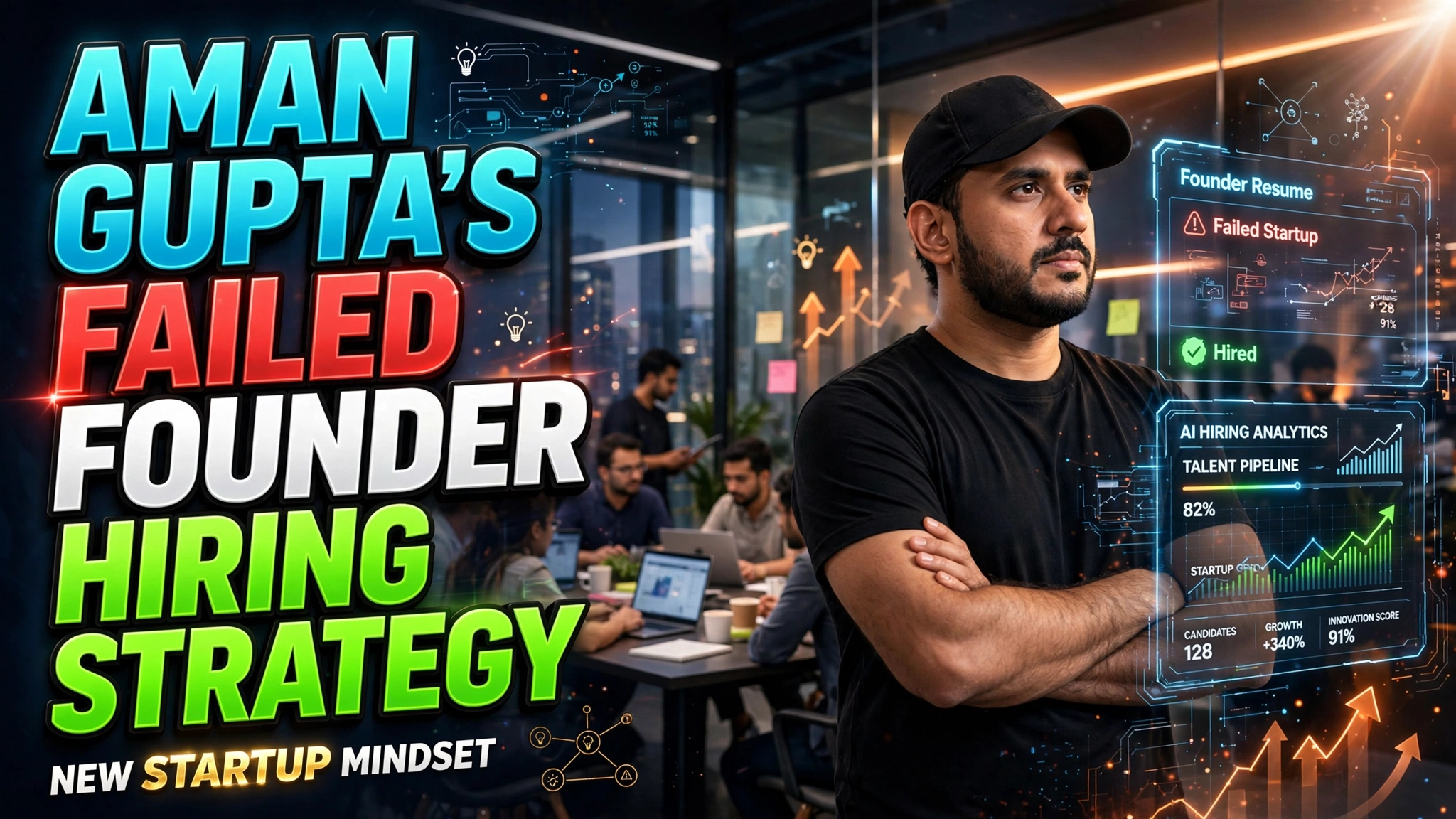
India’s startup ecosystem is witnessing a significant change in how talent is evaluated. At the TechHR India 2026 summit, boAt co-founder Aman Gupta revealed that his new venture, OFF/BEAT, is intentionally hiring failed founders instead of relying only on traditional corporate resumes.
The hiring campaign invited entrepreneurs to “write your comeback story”, attracting thousands of applications from founders whose startups had shut down. The message was simple: failure is no longer viewed as the end of an entrepreneurial journey. Instead, it is increasingly seen as valuable real-world experience.
Why Aman Gupta Wants Failed Founders
Building a startup teaches lessons that are difficult to gain in a conventional corporate role.
Even if a startup eventually closes, founders often develop skills such as:
- Product development
- Customer acquisition
- Fundraising
- Team building
- Financial management
- Negotiation
- Decision-making under pressure
These experiences create professionals who have already dealt with uncertainty, setbacks, and rapid problem-solving.
Failure Is Becoming a Badge of Experience
For many years, business failure carried a strong social stigma in India.
Today, the startup ecosystem is gradually changing that perception.
Investors and founders increasingly recognize that entrepreneurs who have experienced failure often return with:
- Better judgment
- Stronger execution skills
- More realistic expectations
- Improved market understanding
- Greater resilience
Many successful global entrepreneurs built thriving companies only after earlier ventures failed.
What Makes a Failed Founder Different?
Unlike many traditional job candidates, founders have usually been responsible for every aspect of running a business.
A failed founder often understands:
Product-Market Fit
They have experienced firsthand how difficult it is to build a product that customers genuinely want.
Risk Management
Entrepreneurs make high-impact decisions daily, often with limited information and tight budgets.
Resource Optimization
Most founders learn how to achieve more with fewer people and limited capital.
Leadership Under Pressure
Managing uncertainty, motivating teams, and adapting quickly become everyday responsibilities.
These capabilities are increasingly valuable for fast-growing companies.
India’s Startup Hiring Culture Is Changing
Startup hiring is becoming less focused on job titles and more focused on demonstrated experience.
Instead of asking only:
- Which company did you work for?
- How many years of experience do you have?
Recruiters are increasingly asking:
- What problems have you solved?
- Have you built something from scratch?
- How did you respond when things went wrong?
This reflects a broader shift toward skills-based hiring.
Why Startups Value Entrepreneurial Thinking
Companies operating in fast-changing markets need employees who can move quickly and make independent decisions.
Former founders often bring:
- Ownership mentality
- Faster decision-making
- Customer-first thinking
- Innovation mindset
- Adaptability
- High accountability
These qualities can be difficult to identify through a conventional resume alone.
The Rise of the “Comeback Culture”
Aman Gupta’s hiring campaign centered around one powerful idea: every setback can become the beginning of a stronger journey.
The overwhelming response suggests that many entrepreneurs are ready to apply the lessons from unsuccessful ventures to new opportunities.
Rather than hiding failure, many professionals now openly discuss:
- What went wrong
- What they learned
- How they improved
- What they would do differently
This openness is gradually reshaping India’s entrepreneurial culture.
What This Means for the Future of Hiring
If more companies adopt similar hiring philosophies, startup recruitment could become far more experience-driven than qualification-driven.
Founders who once struggled to explain failed ventures during interviews may instead find those experiences becoming valuable assets.
The trend also encourages entrepreneurship by reducing the fear that one unsuccessful business will permanently damage a career.
Final Thoughts
The Aman Gupta failed founders hiring strategy reflects a broader transformation in India’s startup ecosystem. By recruiting entrepreneurs whose ventures did not succeed, OFF/BEAT is recognizing that practical experience, resilience, and problem-solving often matter more than a flawless career history.
As India’s innovation economy matures, hiring decisions are likely to focus less on whether someone has failed and more on what they learned from the experience. For many entrepreneurs, failure is no longer a career-ending event. It is becoming part of the qualification.
FAQ
Why is Aman Gupta hiring failed founders?
According to Aman Gupta, founders who have experienced failure often possess resilience, leadership skills, and practical business knowledge that are highly valuable in startup environments.
What is OFF/BEAT?
OFF/BEAT is Aman Gupta’s new venture, where he has adopted an unconventional hiring approach focused on recruiting entrepreneurs whose startups have shut down.
Why are failed founders valuable to startups?
They typically have experience in product development, fundraising, customer acquisition, team management, and handling uncertainty under pressure.
Is failure becoming more accepted in India’s startup ecosystem?
Yes. Investors and startup leaders increasingly view entrepreneurial failure as practical learning rather than a permanent negative mark on a candidate’s profile.
What skills do startup founders develop?
Founders often gain expertise in leadership, decision-making, product-market fit, financial planning, sales, negotiation, and resilience through hands-on business experience.
