

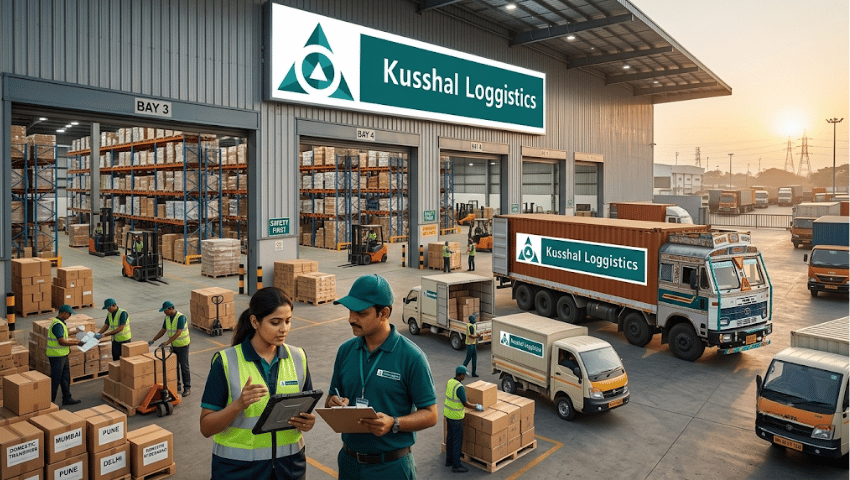
The best third party logistics provider in India for Tier 2 and Tier 3 markets combines three things: warehouses close to where demand is growing, systems that track every SKU and shipment in real time, and a team that fixes problems before they reach your customer. Square footage alone is not enough.
Kusshal Loggistics fits that profile. It runs facilities in Bhiwandi, Ahmedabad and Pune, serves 20+ locations across India, and manages over 2.5 lakh sq ft of warehouse space. Its WMS and TMS systems handle 5,000+ SKUs, and its GPS fleet delivers across western and central India. In one turnaround project, the team raised a client’s inventory accuracy from 75 percent to 99.5 percent within weeks.
The Map Is Changing
A few years ago, a brand selling in Indore or Rajkot usually shipped everything from a big metro warehouse. The truck rattled for two days, the retailer waited, and everyone accepted the delay as normal.
That habit is fading. Shoppers in Nashik, Surat, Raipur and Nagpur now order the same phones, sneakers and skincare as shoppers in Bandra, and they expect the same delivery speed. So brands are moving stock closer to them.
I’ll confess my own Tier 2 education came late. I once told a client that “nobody in Indore orders online at that scale.” He showed me his sales dashboard. I quietly closed my laptop and ordered samosas to cope.
What the Numbers Say About 3PL Growth in India
The shift is visible in the leasing data. India’s top property consultancies are tracking it closely, and the story lines up.
CBRE: 3PL firms lead warehouse demand
CBRE’s report Built to Scale: How 3PL is Solving India’s Supply Chain Puzzle names 3PL players as the single largest source of demand for warehousing and logistics space in the country.
- 2021 to 2024: 3PL firms took 40 to 50 percent of all leasing
- First half of 2025: their share stayed above 30 percent
- Big box spaces: 3PL firms led deals above 100,000 sq ft in both volume and value
Colliers India: a record first half
Colliers India reported about 20 million sq ft of industrial and warehousing leasing across the top eight cities in H1 2025. That was a 33 percent jump year on year. 3PL players drove about 32 percent of Grade A demand, more than any other segment.
CBRE: smaller cities are next
This is the trend that matters most for 2026. CBRE notes that Tier II and Tier III cities are drawing 3PL firms because of rising consumption and much lower land costs. Its leadership expects more 3PL companies to expand beyond the metros and build local hubs closer to the people buying.
CBRE also found that more than 60 percent of India based 3PL players prefer leasing space in multi tenanted buildings over the next 24 months. Around 76 percent are adopting warehouse management software. Translation: the industry wants to grow fast, stay flexible and run on data.
Big numbers are nice. The reasons behind them are more useful.
Why Brands Are Expanding to Tier 2 and Tier 3 Cities
Demand moved first
Consumption in smaller cities has grown faster than many brands planned for. When orders from a region climb, shipping everything from a metro adds days and costs. A regional hub cuts both.
Land is cheaper, so warehousing is cheaper
Rentals in metro micro markets keep rising. Smaller cities offer space at lower rates, which lets brands hold more stock near buyers without draining cash.
Delivery promises got tighter
Ecommerce trained shoppers to expect quick delivery and simple returns. Meeting that promise in Aurangabad from a shed in Gurugram is a tall order. Local stock makes it realistic.
Distributors and retailers want reliability
B2B buyers in these markets have grown less patient with late trucks. A distributor who gets stock on time reorders. One who waits three extra days quietly calls a competitor.
The catch is simple. Expanding into new cities sounds easy on a slide. Running a warehouse there without the right partner is where things go sideways.
What to Look For in a 3PL Partner for Smaller Markets
Plenty of providers will happily rent you space. Far fewer can run it well. Here is a practical checklist.
- Throughput, not just square footage. Ask how many units the team ships per day at peak, and how that number has held up under pressure.
- A WMS that is enforced. Many warehouses own software that staff quietly bypass. Ask to see picking devices, bin mapping and cycle count reports.
- Live transport visibility. GPS tracking and digital proof of delivery should come as standard. If updates arrive only after phone calls, keep looking.
- Network reach. A good partner connects its hubs to the cities you sell in, with planned routes and milk runs for regional retail.
- Real case studies. Ask for proof that the team has fixed a problem like yours, with numbers before and after.
- Willingness to adapt. Your SKU mix will change. Your partner should change with it rather than just send a monthly invoice.
Keep this list handy. Now let’s see how one provider measures up.
Why Kusshal Loggistics Stands Apart
Kusshal Loggistics does not pitch space. It pitches structure. Its SSP approach, Right Strategy, Right Systems, Right People, sits behind every project, and the team runs each warehouse as though it were its own.
Built across western and central India
Large format facilities in Bhiwandi, Ahmedabad and Pune anchor the network. From there, the company reaches 20+ locations, including growth markets such as Nagpur, Surat, Rajkot, Indore, Raipur and Nashik routes. Bhiwandi’s direct link to JNPT also supports EXIM container movement across India.
The scale behind the service
- 2.5 lakh sq ft of managed warehouse space
- 5,000+ SKUs handled with precision
- 300+ trained employees
- 1,700+ tons of material moved daily
- 1,000+ transactions processed every day
- 20+ locations across India
Systems that actually run the floor
The Warehouse Management System covers putaway, picking, dispatch, cycle counting and returns. It integrates with couriers, syncs orders with marketplaces and generates live tracking links.
On the road, the Transport Management System handles route planning, order assignment and GPS tracking. Clients receive daily MIS reports on vehicle use, route performance and pending deliveries. Nobody has to call a driver and hope for an answer.
Transport that suits regional routes
The GPS enabled fleet runs Full Truck Load, Part Truck Load and city milk runs, from Tata Ace vehicles for urgent small loads up to 33 ton trucks for heavy cargo. Vehicles load at night to beat daytime truck restrictions, so deliveries start early. Clients can even brand the trucks for extra visibility in new markets.
Case study: from chaos to 99.5 percent accuracy
This is where Kusshal earns its reputation. The team took over a 1.25 lakh sq ft warehouse that looked full and functioned like a traffic jam. Inventory accuracy sat at just 75 percent. More than 120 people worked daily, yet 40 to 50 escalations still landed every month.
The fix was methodical. Physical verification. System hygiene. Device based picking. Bin mapping. CCTV in packing zones. Order staging. Real time MIS.
Within two months, the results spoke loudly:
- Inventory accuracy rose from 75 percent to 99.5 percent
- Manpower dropped by 30 percent
- Escalations fell to under 10 a month
- D2C orders tripled per day, and marketplace orders nearly tripled too
For a fashion client, daily output climbed from 15,000 units to 25,000 at peak. Same space. Very different results.
Warehousing and transport under one roof
Because storage and transport sit with one team, goods move from shelf to truck without waiting on a second vendor. Fewer handoffs mean fewer mistakes. For brands entering a new city, that single point of accountability is worth a lot of sleep.
Where 3PL Goes in 2026 and Beyond
The next chapter of Indian logistics will be written in cities that rarely made headlines before. Consumption will keep spreading. Warehouses will get smarter. And brands will lean on specialists so they can spend their energy on products and customers.
The partners who win will pair good locations with tight operations. They will track every unit, report honestly and fix problems early.
Kusshal Loggistics already works that way. If your next growth market sits beyond the metros, pick a third party logistics provider in India that brings structure along with space. Share your volumes, SKU count and target cities, and request a custom proposal from Kusshal Loggistics today.
