

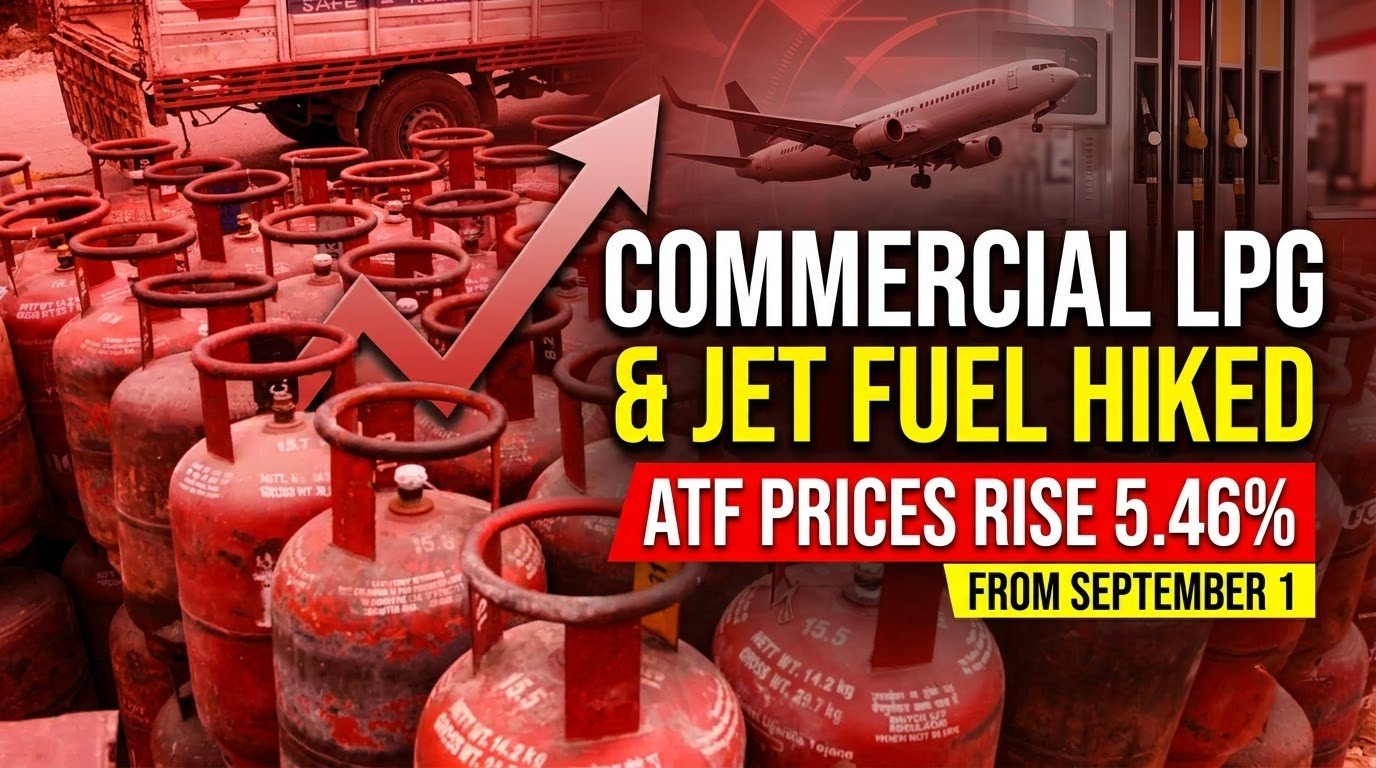
Commercial LPG and Jet Fuel Hiked: ATF Prices Rise 5.46% From September 1
Commercial LPG and Jet Fuel Hiked from September 1, bringing higher fuel costs for airlines and businesses using commercial cooking gas. Aviation Turbine Fuel (ATF) prices have been increased by 5.46%, while prices of 19-kg commercial LPG cylinders have also been raised across major Indian cities.
The latest revision affects aviation fuel and commercial LPG users, while households using the standard 14.2-kg domestic LPG cylinder have received some relief as their prices remain unchanged.
ATF Prices Rise by 5.46%
The biggest change in the latest fuel-price revision is the increase in Aviation Turbine Fuel prices.
ATF prices have been increased by 5.46%, representing an increase of approximately ₹6.28 per litre.
Aviation Turbine Fuel is the primary fuel used by commercial airlines, making its price an important factor for the aviation industry.
Fuel expenses represent a major component of airline operating costs. Therefore, a substantial increase in ATF prices can put additional pressure on airlines’ overall cost structures.
Why ATF Prices Matter for Airlines
Airlines closely monitor ATF prices because fuel is one of their largest operating expenses.
When jet fuel becomes more expensive, airlines face higher costs for operating flights. Depending on market conditions and competitive pressures, airlines may absorb some of the increase or eventually pass part of the additional cost to passengers through fares or other charges.
The impact can vary depending on airline strategies, ticket demand, route economics and broader fuel-market conditions.
Commercial LPG Cylinder Prices Increased
Alongside the ATF hike, prices of 19-kg commercial LPG cylinders have also been increased.
The increase is reported to be up to ₹11.50 across major cities from September 1.
Commercial LPG cylinders are widely used by restaurants, hotels, catering businesses, food outlets and other commercial establishments.
Even a relatively small increase in cylinder prices can affect businesses that consume large quantities of LPG on a regular basis.
Domestic LPG Prices Remain Unchanged
While commercial LPG prices have increased, there is no change in the price of the 14.2-kg domestic LPG cylinder.
This means household consumers using the standard domestic cooking-gas cylinder will not face an additional price increase from this particular revision.
The distinction between commercial and domestic LPG pricing is important because the two categories serve different consumer groups and are revised according to applicable pricing mechanisms.
Impact on Restaurants and Businesses
The commercial LPG increase could have a direct impact on restaurants, hotels and other businesses that rely heavily on cooking gas.
For food-service businesses, fuel is one of several recurring operational expenses alongside ingredients, wages, rent, electricity and transportation.
An increase in LPG prices can therefore add to overall operating costs.
Businesses may respond by improving energy efficiency, adjusting procurement strategies or reviewing menu and operating costs.
Possible Impact on Consumers
The impact of the commercial LPG increase on consumers may not be immediate.
Restaurants and food businesses could absorb the additional cost, particularly in highly competitive markets.
However, if operating expenses continue to rise across multiple categories, businesses may eventually consider adjustments to prices.
The actual effect will depend on the size of the business, LPG consumption and other input costs.
Aviation Industry Faces Higher Fuel Costs
The ATF increase is particularly relevant for India’s aviation industry.
Airlines operate on tight cost structures, and fuel prices can significantly influence profitability.
A higher ATF price means that airlines will have to account for increased fuel expenditure while planning their operations.
The effect can be more noticeable on routes with high fuel consumption or during periods when ticket demand is relatively weak.
Could Airfares Increase?
A rise in ATF prices does not automatically mean that airfares will increase immediately.
Airline ticket prices are influenced by several factors, including demand, capacity, competition, seasonality, airport charges and operating costs.
Airlines may choose to absorb higher fuel expenses for a period rather than immediately increase ticket prices.
However, sustained increases in fuel costs can create pressure for airlines to review their pricing strategies.
Fuel Prices and the Broader Economy
Fuel prices have a wider economic impact because transportation and energy costs influence multiple sectors.
For airlines, higher jet fuel prices affect flight operations and potentially ticket pricing.
For businesses using commercial LPG, increased cooking-gas costs can affect operating expenses.
These changes can become more significant when combined with movements in other commodity and service prices.
September Fuel Price Revision
The latest revision effective September 1 reflects separate changes across aviation fuel and commercial LPG.
ATF has recorded a notable increase of 5.46%, while commercial LPG cylinders have seen a smaller increase of up to ₹11.50 in major cities.
At the same time, domestic LPG cylinder prices have remained unchanged, limiting the immediate impact on household cooking-gas expenses.
What the ATF Hike Means for Passengers
Air passengers may watch the ATF increase closely because fuel prices can influence airline operating costs.
However, passengers should not assume that the full increase will automatically appear in ticket prices.
Airlines consider multiple factors when determining fares, and competition between carriers can also limit their ability to pass higher costs directly to consumers.
The impact on passengers will therefore depend on how airlines respond to the higher fuel expense.
What Commercial LPG Users Should Watch
Restaurants, hotels and other commercial LPG consumers will need to account for the higher cylinder prices in their operating budgets.
Businesses with high LPG consumption may feel the cumulative effect more strongly than establishments that use relatively small quantities.
Energy efficiency and careful cost management could become increasingly important for businesses operating on narrow margins.
Domestic Consumers Get Relief
For household consumers, the unchanged price of the 14.2-kg domestic LPG cylinder means there is no additional financial burden from this revision.
This is particularly relevant for families that rely on LPG for everyday cooking.
While commercial LPG users face higher costs, domestic consumers remain unaffected by the latest increase in the standard household cylinder price.
Commercial LPG and Jet Fuel Hiked: Key Takeaway
Commercial LPG and Jet Fuel Hiked from September 1, with Aviation Turbine Fuel prices rising by 5.46%, or around ₹6.28 per litre.
At the same time, prices of 19-kg commercial LPG cylinders have increased by up to ₹11.50 across major cities.
The changes are expected to have the biggest direct impact on airlines and commercial establishments such as restaurants, hotels and catering businesses.
For households, there is no immediate increase from this revision as the price of the 14.2-kg domestic LPG cylinder remains unchanged.
The latest fuel-price changes will be closely watched by the aviation and hospitality sectors as businesses assess how the higher input costs affect their operations.
Frequently Asked Questions (FAQs)
1. What fuel prices have increased from September 1?
ATF prices and 19-kg commercial LPG cylinder prices have increased from September 1.
2. By how much have ATF prices increased?
Aviation Turbine Fuel prices have increased by 5.46%, equivalent to an increase of approximately ₹6.28 per litre.
3. How much has commercial LPG increased?
Prices of 19-kg commercial LPG cylinders have increased by up to ₹11.50 across major cities.
4. Have domestic LPG cylinder prices increased?
No. The price of the 14.2-kg domestic LPG cylinder remains unchanged.
5. Who will be affected by the commercial LPG price increase?
Restaurants, hotels, catering businesses, food outlets and other commercial establishments that use 19-kg LPG cylinders will be directly affected.
6. Why is the ATF price important?
ATF is the primary fuel used by commercial airlines, so changes in its price can significantly affect airline operating costs.
7. Will airfares increase because of the ATF hike?
Not necessarily. Airfares depend on several factors, including demand, competition, capacity and other operating expenses.
8. Will restaurants increase food prices because of higher LPG costs?
Not necessarily. Businesses may initially absorb the additional cost, although sustained increases in operating expenses could eventually put pressure on prices.
9. Are household LPG users affected by this revision?
Households using the 14.2-kg domestic LPG cylinder are not affected by this particular price revision.
10. When did the latest fuel-price changes become effective?
The latest changes in ATF and commercial LPG prices became effective on September 1.
