

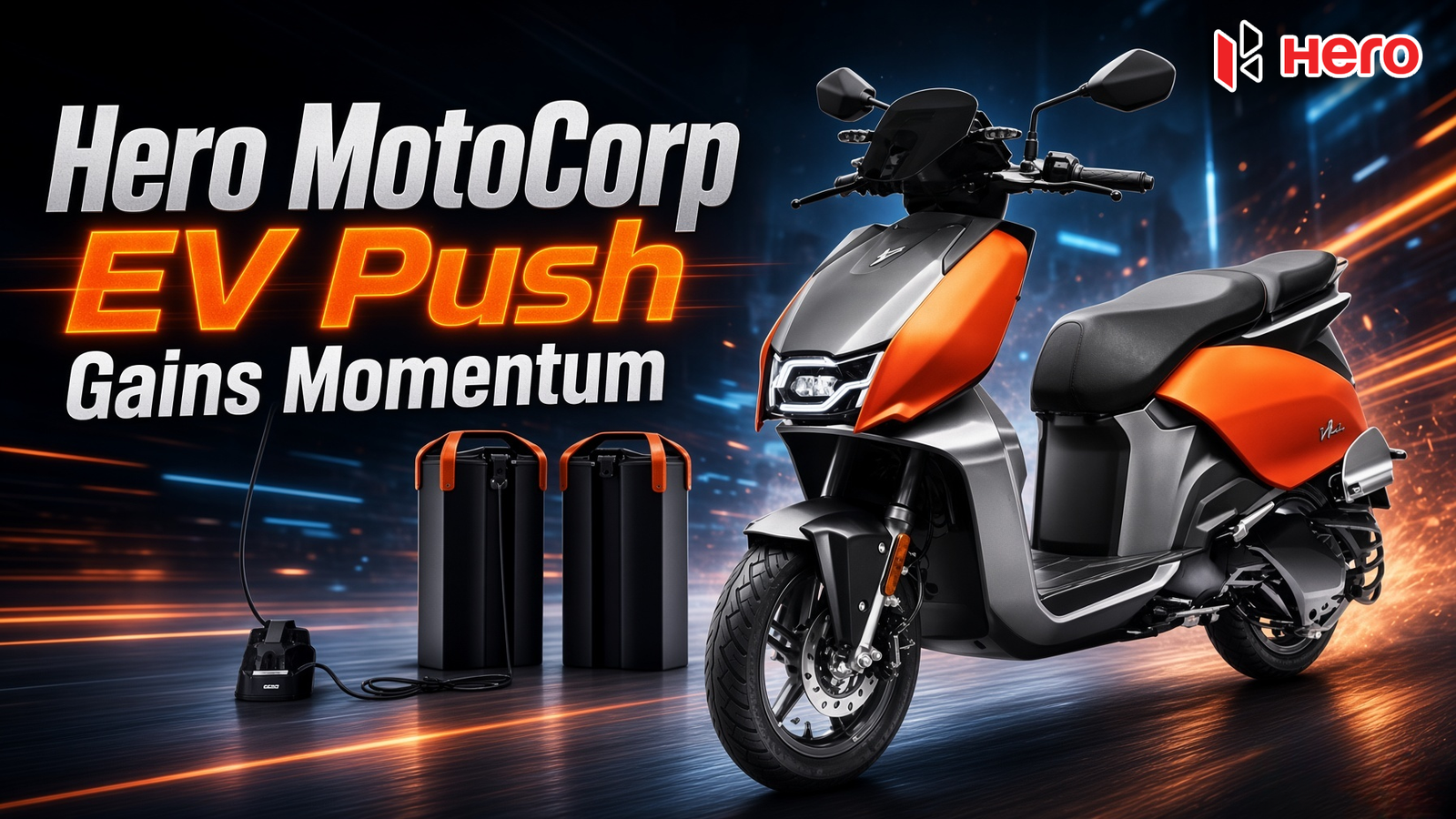
Hero MotoCorp is preparing for a bigger push into India’s electric two-wheeler market as the company expects the overall two-wheeler industry to deliver double-digit growth in FY27.
The automaker is also planning to significantly expand its Hero MotoCorp EV production capability, targeting capacity of around 45,000 units per month.
The move comes as competition in India’s electric scooter and motorcycle market intensifies, with established players and EV-focused companies such as Ola Electric and Ather Energy competing aggressively for customers.
Hero is also preparing to launch new electric motorcycles in 2027, potentially giving the company a stronger presence in a segment that is still developing rapidly.
Hero MotoCorp Expects Double-Digit Two-Wheeler Growth
Hero MotoCorp expects India’s two-wheeler industry to maintain strong momentum in FY27.
Several factors are supporting the outlook, including improving rural demand, replacement purchases, financing availability and continued consumer interest in personal mobility.
For Hero, which has historically been one of India’s largest motorcycle manufacturers, industry-wide growth creates an opportunity to increase volumes while simultaneously shifting its product portfolio toward electric mobility.
EV Production Capacity to Reach 45,000 Units a Month
A major part of Hero’s strategy is expanding its electric vehicle manufacturing capability.
The company plans to increase EV production capacity to approximately 45,000 units per month.
That represents a significant increase in its ability to serve the growing electric two-wheeler market.
Higher capacity is important because EV demand can change quickly when new models, attractive financing schemes or government incentives stimulate purchases.
Having manufacturing capacity ready allows Hero to respond faster without relying on a major production expansion every time demand rises.
Why Hero Is Betting Big on Electric Motorcycles
Electric scooters currently dominate India’s electric two-wheeler market.
However, motorcycles represent a much larger part of India’s overall two-wheeler market.
For Hero MotoCorp, electric motorcycles therefore offer a potentially important growth opportunity.
The company’s existing expertise in motorcycles, extensive dealer network and brand recognition could give it an advantage when electric motorcycles become more mainstream.
The company is preparing to introduce new electric motorcycle models in 2027, putting the segment firmly on its long-term product roadmap.
Hero vs Ola and Ather
The EV market has become increasingly competitive.
Ola Electric established a strong presence in electric scooters, while Ather has built its reputation around technology-focused premium electric scooters.
Hero’s strategy is somewhat different.
Instead of competing only in the premium electric scooter space, the company can use its traditional strength in motorcycles and mass-market mobility to target a much broader customer base.
The arrival of new electric motorcycles could therefore change the competitive dynamics of India’s EV market.
Hero’s Existing EV Platform
Hero has already entered the electric mobility segment through its Vida brand.
The company can use the experience gained from its existing electric products to improve future models, manufacturing efficiency and customer service.
The next challenge is scale.
India’s EV market is growing, but consumers still compare electric vehicles closely with petrol alternatives on price, range, charging convenience and ownership costs.
Hero’s ability to solve those concerns will determine how quickly its electric portfolio can expand.
Why Production Capacity Matters
Increasing EV production capacity is not simply about manufacturing more vehicles.
It can also help reduce per-unit manufacturing costs through economies of scale.
Higher volumes can allow manufacturers to negotiate better prices for components, optimise factory utilisation and improve supply-chain efficiency.
For Hero, achieving higher EV volumes could therefore make future electric motorcycles and scooters more competitive on price.
The Challenge: EV Competition Is Getting Tougher
Hero is entering an EV market where competition is already intense.
Ola and Ather have established strong consumer recognition in electric scooters, while other manufacturers are also expanding their electric portfolios.
Price competition is another factor.
Consumers are becoming more aware of battery capacity, real-world range, charging time, software features and after-sales support.
A successful EV product now needs more than an electric powertrain.
It needs a convincing overall ownership proposition.
Range and Charging Will Remain Critical
For mainstream Indian buyers, range anxiety remains an important consideration.
Consumers want an EV that can handle daily commuting without requiring frequent charging.
Charging infrastructure also matters, particularly for customers living in apartments or areas without dedicated parking.
Hero’s extensive physical presence could become an advantage if the company combines its dealer network with reliable EV servicing and charging support.
Can Hero Bring Its Motorcycle Leadership to EVs?
This is perhaps the biggest strategic question.
Hero MotoCorp has spent decades building its position in India’s motorcycle market.
Its brand is strongly associated with affordability, reliability and mass-market mobility.
The company now needs to transfer those strengths into electric vehicles.
If Hero can offer electric motorcycles with competitive pricing, practical range and dependable after-sales service, it could unlock a much larger customer segment than premium EV buyers alone.
What Investors Should Watch
Hero MotoCorp’s EV strategy will be closely watched as the company increases investment in electric mobility.
Key factors to monitor include:
- Monthly EV sales
- EV production utilisation
- New motorcycle launches
- Battery and component costs
- EV margins
- Market share
- Charging and service infrastructure
- Competition from Ola, Ather and other manufacturers
The most important metric will ultimately be whether Hero can turn higher production capacity into sustainable EV sales and profitability.
What This Means for India’s EV Market
Hero’s planned expansion is another sign that India’s electric two-wheeler market is moving beyond early adopters.
Large established manufacturers are increasingly treating EVs as a core part of their future portfolios rather than a small experimental category.
The next stage of competition will likely focus on scale, affordability, battery technology, range and distribution.
That could make electric motorcycles one of the most important battlegrounds in India’s two-wheeler industry over the next few years.
Final Thoughts
Hero MotoCorp is entering FY27 with an ambitious growth outlook and a stronger electric-vehicle strategy.
The company expects the two-wheeler industry to deliver double-digit growth, while its plan to raise EV production capacity to 45,000 units per month signals a serious commitment to electric mobility.
The planned launch of new electric motorcycles in 2027 could be particularly important.
Hero now has an opportunity to combine its enormous motorcycle customer base and distribution network with the rapidly developing EV market. If it executes well, the company could become a much stronger challenger to established electric two-wheeler brands such as Ola and Ather.
FAQ
What is Hero MotoCorp’s EV production target?
Hero MotoCorp plans to increase its EV production capability to around 45,000 units per month.
Does Hero MotoCorp expect two-wheeler growth in FY27?
Yes. The company expects the Indian two-wheeler industry to record double-digit growth in FY27.
When will Hero MotoCorp launch new electric motorcycles?
Hero is preparing to launch new electric motorcycle models in 2027.
Who are Hero MotoCorp’s major EV competitors?
The company will face competition from EV-focused manufacturers such as Ola Electric and Ather Energy, along with other established two-wheeler companies entering the EV segment.
Why are electric motorcycles important for Hero MotoCorp?
Motorcycles make up a major portion of India’s two-wheeler market. Entering electric motorcycles gives Hero an opportunity to bring its established motorcycle customer base into electric mobility.
