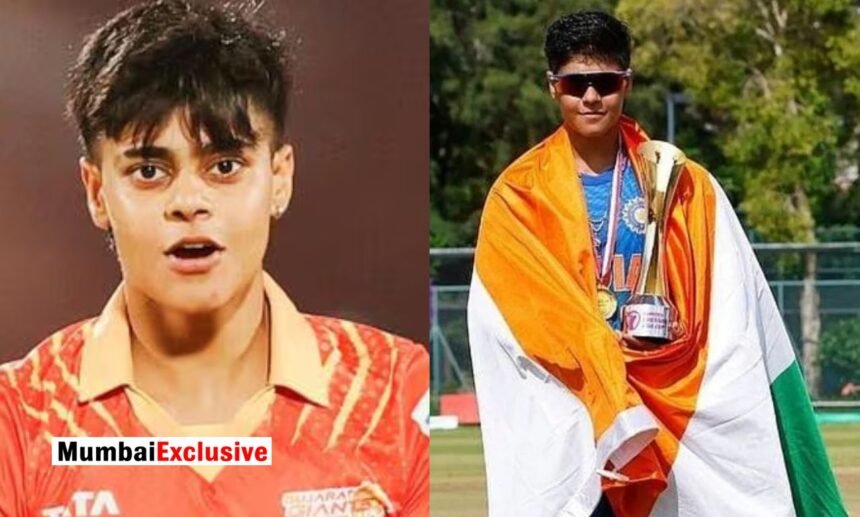
Cricket in India is more than just a sport—it is a pathway of discipline, ambition, and opportunity. Over the past few years, women’s cricket has gained remarkable visibility, creating space for young athletes to dream bigger. One of the emerging names often discussed in this growing landscape is kashvee gautam. Her journey offers insight into how talent, structure, and perseverance come together in modern Indian cricket.
- Early Life and Introduction to Cricket
- Playing Style and Role on the Field
- Domestic Cricket: The Foundation of Growth
- The Impact of the Women’s Premier League
- Skill Development in Modern Women’s Cricket
- Representation and Opportunity
- Challenges Young Cricketers Face
- What Her Journey Teaches About the System
- Conclusion
This article explores who kashvee gautam is, her cricketing background, her role in the domestic system, and what her rise tells us about the evolving framework of women’s cricket in India.
Early Life and Introduction to Cricket
Like many young cricketers in India, kashvee gautam began her journey at a young age. Growing up in a country where cricket dominates playgrounds and television screens alike, exposure to the sport often begins informally. For aspiring female cricketers, however, structured training and access to professional coaching historically came with additional challenges.
Over time, institutional support for women’s cricket improved. State associations began investing more in junior-level tournaments, and structured competitions such as Under-19 and Under-23 events became stepping stones. For players like kashvee gautam, these platforms were essential in building both skill and competitive experience.
Playing Style and Role on the Field
Understanding a cricketer’s role requires looking at both technical skill and tactical contribution. kashvee gautam is known primarily for her abilities as a pace bowler. Fast bowling in women’s cricket has become increasingly impactful, especially as the game evolves toward faster scoring formats like T20 cricket.
Pace bowlers play a critical role in:
-
Taking early wickets in the powerplay overs
-
Controlling scoring rates during middle overs
-
Delivering disciplined spells at the death
For young fast bowlers, fitness and workload management are particularly important. Modern training emphasizes strength conditioning, injury prevention, and biomechanics. These aspects are now central to the development of players such as kashvee gautam, reflecting the professionalization of women’s cricket in India.
Domestic Cricket: The Foundation of Growth
Before reaching national or franchise recognition, Indian cricketers build their careers through domestic tournaments organized under the umbrella of the Board of Control for Cricket in India (BCCI). Domestic competitions like the Senior Women’s One Day Trophy and T20 tournaments serve as performance benchmarks.
For players like kashvee gautam, domestic cricket offers:
-
Match experience under competitive conditions
-
Exposure to selectors and scouts
-
Opportunity to adapt to different formats
Domestic cricket is not only about statistics; it is about consistency. Selection pathways increasingly reward players who demonstrate discipline over multiple seasons rather than isolated standout performances.
The Impact of the Women’s Premier League
The launch of the Women’s Premier League (WPL) marked a major shift in Indian women’s cricket. The league introduced franchise-based competition, international exposure, and professional contracts for female cricketers.
Young talents such as kashvee gautam have benefited from this ecosystem in several ways:
-
Training alongside experienced international players
-
Working with specialized coaching staff
-
Exposure to high-pressure matches broadcast globally
The WPL has also altered how talent is identified. Scouts now look at players not just for domestic performance but also for adaptability in franchise cricket. This shift reflects a broader move toward professional league structures similar to men’s cricket.
Skill Development in Modern Women’s Cricket
To understand the rise of players like kashvee gautam, it is helpful to look at how skill development in women’s cricket has evolved.
1. Sports Science Integration
Training programs now incorporate data analytics, fitness tracking, and video analysis. Fast bowlers especially rely on biomechanical assessment to maintain performance and reduce injury risks.
2. Mental Conditioning
High-performance environments emphasize mental resilience. Competitive leagues require composure under pressure, strategic awareness, and adaptability.
3. Multi-Format Readiness
Modern cricketers are expected to switch between T20, One Day, and sometimes longer formats. For a pace bowler like kashvee gautam, this means adjusting length, speed variation, and tactical approach.
These structural improvements create a stronger foundation for young players entering professional cricket.
Representation and Opportunity
Women’s cricket in India has undergone a significant transformation over the past decade. Increased media coverage, better pay structures, and centralized contracts have improved stability for players.
The presence of young athletes like kashvee gautam reflects broader systemic change:
-
Grassroots programs now identify talent earlier
-
State academies offer structured pathways
-
Professional leagues provide financial security
Representation also matters. When young girls see players competing on national television, cricket becomes a visible and achievable career path.
Challenges Young Cricketers Face
Despite progress, the journey is rarely straightforward. Fast bowlers in particular deal with:
-
Injury management
-
Heavy match schedules
-
Competition for limited national spots
For emerging talents like kashvee gautam, navigating these challenges requires balance—maintaining form while managing physical strain. This highlights the importance of coaching infrastructure and medical support in today’s cricket ecosystem.
Additionally, transition phases—moving from junior cricket to senior domestic levels, and then to franchise or international platforms—require adaptation both technically and psychologically.
What Her Journey Teaches About the System
Rather than focusing on headlines, examining the career arc of kashvee gautam helps illustrate how India’s women’s cricket framework operates.
Her journey reflects:
-
The role of domestic tournaments as talent incubators
-
The influence of franchise leagues in accelerating growth
-
The increasing professionalization of training and preparation
In many ways, her path mirrors that of a new generation of cricketers who are benefiting from structured systems rather than relying solely on raw talent.
Conclusion
The story of kashvee gautam is not just about an individual athlete; it is about the changing face of women’s cricket in India. With improved infrastructure, professional leagues like the Women’s Premier League, and stronger domestic systems under the BCCI, young cricketers now have clearer pathways to growth.
Understanding her journey provides a window into how modern Indian cricket nurtures emerging talent. It shows that development today is built on structured competition, scientific training, and sustained opportunity.
As women’s cricket continues to evolve, players like kashvee gautam represent both the progress achieved and the potential that lies ahead.